Discovering that you have a deep cavity or a fractured tooth usually comes with a choice: do you need a full dental crown, or can a simple filling fix the problem? Deciding what’s best for your teeth can feel confusing, especially when you’re balancing durability, tooth structure preservation, and long-term costs. If you’re consulting a dentist in Edmonton about tooth damage or decay, understanding how these two treatments differ is the first step toward restoring a healthy smile.
The decision between a crown and a filling usually depends on how much healthy enamel remains. Mild to moderate cavities can be repaired with fillings, but severe decay requires a more aggressive approach to cover and protect the entire tooth. If you know how your dentist measures the damage, then it’s easy and obvious to pick the best solution.
Understanding the Difference Between Fillings and Crowns
Fundamentally, dental crowns and fillings repair a damaged tooth so you can speak, chew, and smile comfortably. But they do so in distinct ways to protect your teeth’s structure.
One type of direct restoration is a dental filling. To restore your tooth’s original shape and function, your dental staff will remove the decayed portion, clean the area, and replace it with durable composite resin or porcelain. The resin will attach directly to your natural enamel.
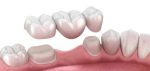
An indirect restoration is a crown, sometimes called a cap. It fully covers the visible part of the tooth above the gum line. A crown acts as a protective helmet, encasing weak walls and evenly absorbing bite stresses throughout the jaw, rather than merely plugging a hole inside the tooth.
How Big Can a Filling Be Before It Fails?
Many patients ask how big a filling can be before it becomes risky. While modern composite materials are remarkably strong, a filling relies on the walls of your remaining natural tooth for support.
As a general rule in restorative dentistry, a filling works best when more than half of the tooth’s original structure remains healthy and intact.
- Small to Medium Cavities: Ideal for fillings. The surrounding enamel walls are strong enough to support the restorative material and withstand normal chewing pressure.
- Large Cavities (Over 50% Decay): Push the limits of a standard filling. When too much enamel is removed, the remaining thin walls become brittle.
- Extreme Decay or Fractures: Unsuitable for fillings. Placing a massive filling in a severely compromised tooth can create a “wedge effect,” causing the surrounding natural tooth walls to crack under pressure.
When Is a Crown Necessary?
Determining when a crown is necessary comes down to evaluating structural stability and long-term protection. If a tooth is significantly weakened, a large filling can lead to fractures down the road, sometimes resulting in complete tooth loss.
Your dental provider will typically recommend a crown in the following situations:
- Extensive Tooth Decay: When a cavity consumes more than half of the natural tooth crown, leaving insufficient support for a filling.
- Cracked or Fractured Teeth: Teeth with deep vertical cracks or broken cusps require full coverage to hold the pieces together and prevent further splitting.
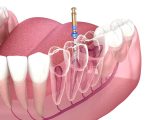
- Post-Root Canal Treatment: Teeth that have undergone root canal therapy lose their internal blood supply and become brittle over time. A crown provides the necessary strength to keep the tooth functional.
- Severe Enamel Wear: Advanced acid erosion or severe nighttime teeth grinding (bruxism) can wear down teeth to the point where crowns are needed to rebuild a proper bite.
The In-Between Option: Onlay vs Crown
If your tooth needs more support than a standard filling can provide, but still has plenty of healthy structure left, your care team might discuss an onlay vs. a crown.
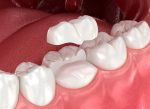
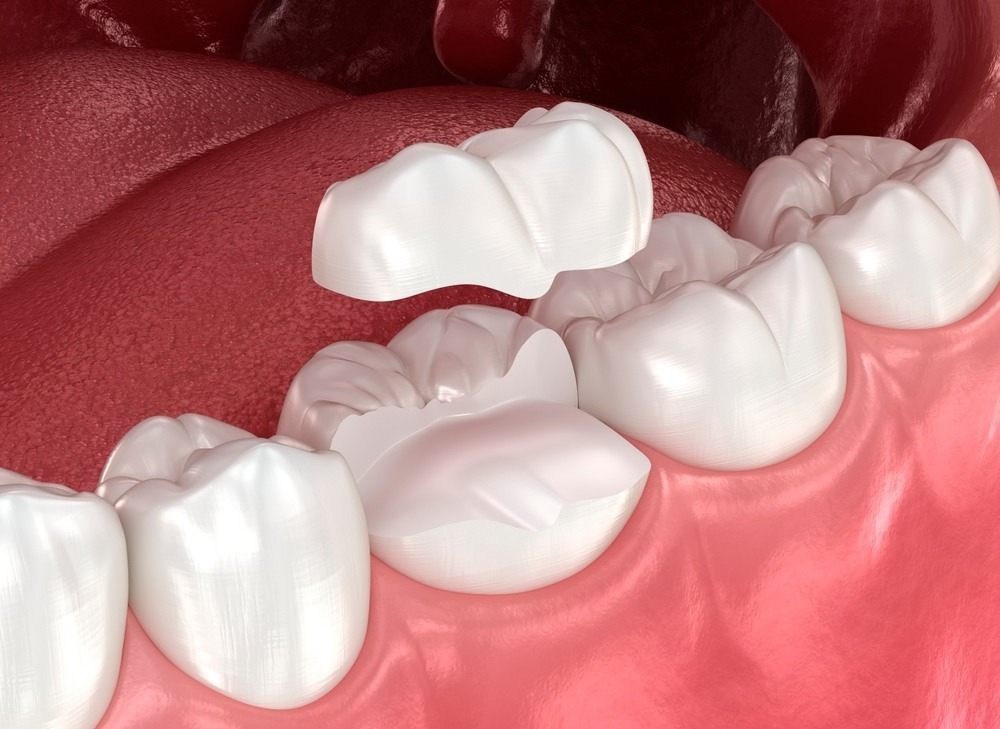
An onlay (often called a partial crown) is a custom-made restoration that covers one or more damaged cusps without reshaping the entire structure down to the gumline.
- Onlays: Preserve more of your natural enamel while offering much stronger support than a standard filling. They are ideal for moderate damage where the tooth walls remain strong.
- Crowns: Provide 360-degree coverage for severely broken, heavily decayed, or structurally compromised teeth when you need maximum protection.
Discussing your options with a dentist near you will help determine whether a conservative onlay or a full crown is the most reliable choice for your specific situation.
Evaluating Dental Crown Candidacy: What Patients Should Know
When considering dental crown candidacy in Edmonton, dental professionals conduct a thorough visual exam and review digital X-rays to assess what’s beneath the surface.
Key factors that will impact your treatment plan include:
- Healthy Tooth Root and Bone Support: A crown needs a healthy, solid root base and enough surrounding bone level.
- Sufficient Above-Gum Structure: You need adequate natural tooth structure above the gum line to support the crown.
- Bite Alignment and Habits: Patients who clench or grind their teeth may require high-strength materials, such as monolithic zirconia, to prevent premature wear.
For patients evaluating a crown vs. a large filling in Belle Rive, Edmonton, practitioners focus on long-term tooth preservation, ensuring that whatever treatment you select protects your smile for years to come.
Comparing Your Options Side by Side
To get a sense of how these treatment options compare, here’s a quick rundown of how fillings, onlays, and crowns work:
- Standard Filling: Best for small damage. Retains most natural enamel. One visit. Less initial cost
- Dental Onlay: Ideal for moderate damage. Preserves healthy side walls. Provides strong support for compromised cusps. Durable.
- Full Crown: Best for badly damaged or post-root canal teeth; covers the entire tooth above the gums; provides maximum structural protection and durability.
Restoring Comfort and Strength to Your Smile!
For a traditional dental restoration, you don’t need to opt for the most complicated procedure, just the one that will keep your natural tooth healthy, functional, and pain-free for the longest time possible. A filling is a good, conservative choice for minor decay. Still, a crown on a severely weakened tooth can save you from unexpected pain, sudden fractures, and expensive emergency repairs in the future.
At Belle Rive Dental Clinic, our experienced team provides honest and open assessments and tailored care to help you reach your unique smile goals. Contact us today to book your consultation and find the best solution for your restorative needs.
Frequently Asked Questions
Can a large filling be replaced with a crown later on?
Yes, replacing an aging or failing large filling with a crown is a very common procedure. If decay develops under an old filling or the surrounding enamel cracks, switching to a crown provides the full-coverage support you need.
Is getting a dental crown painful?
Not at all. Your dental team thoroughly numbs the tooth and surrounding gum tissue with a local anesthetic before preparing the tooth. You may feel mild sensitivity for a few days after the procedure, but this quickly fades.
How long can I expect a large filling to last versus a crown?
A standard composite filling typically lasts between 5 and 10 years, depending on your oral hygiene and bite habits. A well-maintained dental crown can easily last 15 years or longer because it protects the entire tooth from chewing stress.
What happens if I choose a large filling when I actually need a crown?
An oversized filling on a severely weakened tooth increases the risk of fracture under normal chewing pressure. If the crack extends below the gumline or into the root, the tooth may become unsavable and require extraction.